What Is Propolis (Bee Glue)? A Simple Guide to the Hive's Resin
November 1, 2026 · The3Beez
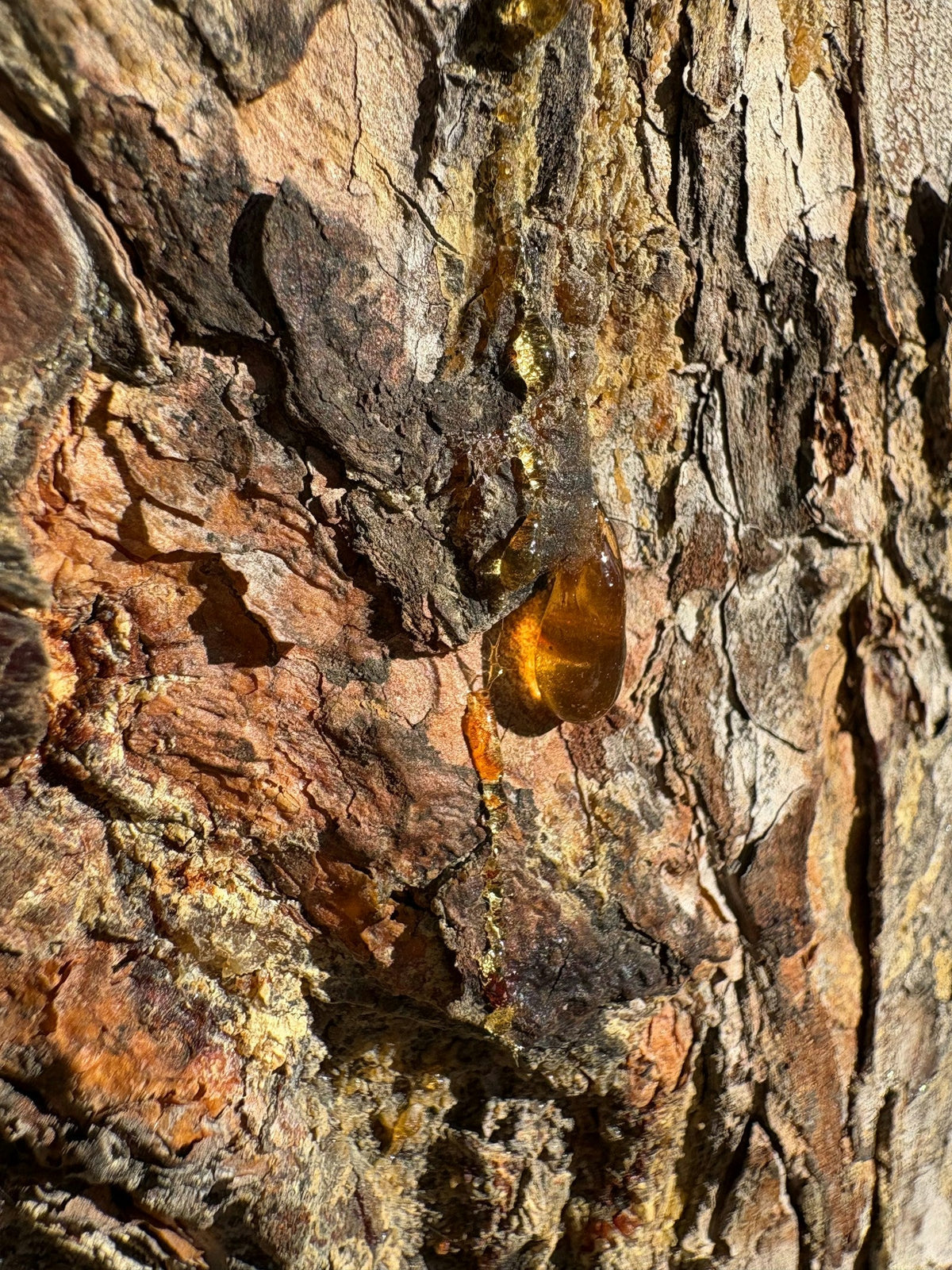
Every beehive holds a sticky brown substance that clings to the beekeeper's fingers whenever the lid comes off. It is called propolis, or bee glue; in Arabic it is عكبر. It is not honey and it is not wax: it is a third thing the bee makes from trees.
Where the name comes from
The word is Greek: "pro" means "in front of" and "polis" means "city", so "what stands in front of the city". The city is the hive, because bees use it at the entrance and on the walls.
What propolis is made of
The bee gathers resin, the sticky substance that tree buds and bark give off, carries it home on her hind legs the way she carries pollen, and mixes it with beeswax inside the hive. The make-up usually given in the literature:
- About 50% plant resins.
- About 30% wax.
- About 10% essential oils.
- About 5% pollen, and the rest other substances.
Because it comes from trees, its make-up changes from country to country and season to season, depending on which trees the bees visit.

Why the colour varies
Propolis can be greenish yellow, light brown or a brown so dark it looks black, and in some countries red or green. The colour comes from the tree the resin was taken from, so a darker colour means a different source, not better or worse quality.
Its texture changes with temperature
When warm, propolis is soft and very sticky; when cold, it hardens and becomes brittle. Beekeepers use this: they chill the frames or screens coated with it, then crack it off in small pieces.
How beekeepers collect it
Either by scraping it off the frames and hive walls, or by laying a perforated plastic screen under the lid; the bees fill its holes with propolis as if they were cracks. The amount is small: from a few tens to a few hundred grams per hive per year. How the bees themselves use it inside the hive is a story of its own, told in How bees use propolis to protect their hive.
The forms it is sold in
In many countries propolis is sold as raw pieces, liquid extracts, sprays or lozenges. When buying, look for three things:
- The solvent: many liquid extracts are made with alcohol, and the label usually says so. Water or glycerine extracts exist for those who avoid alcohol.
- The source: the country, and the type of propolis if stated.
- Allergy: propolis is one of the bee products most often linked to skin allergy. If you are allergic to bee products, ask your doctor first.
Propolis and the other hive products
A hive makes more than one thing, each from a different source: honey from flower nectar (how bees make honey), bee pollen from the flowers themselves, bee bread from stored pollen, royal jelly from the worker bees' glands, and beeswax from glands in the bee's abdomen. Propolis is the only one that comes from trees.
The3Beez does not sell propolis at the moment, but you will find bee pollen, bee bread and Sider honey with royal jelly.